A later evening in the shop—not an official story quest.
This is the second original Miki-and-Jun story, following The Bowl Nobody Served. We imagine their shop at Level 15, with the Ticket Machine, self-service water and Karaage equipment available under the published unlock rules. Their conversations, mistakes and resolution are fiction. The game’s features are sourced separately; no number of sessions needed to reach that level is claimed.
The shift below is an original, fictional illustration of the game’s management loop. Its dialogue, mishaps and outcome are invented. It is not an official quest, a transcript, or a claim that we played this session. Official game facts are identified in the opening and source notes.
1. The machine that would give them time
Before they logged in, Miki sent Jun three small sketches of an entrance curtain. She had drawn them on the back of a receipt while waiting for the kettle. One used a warm rust colour, one a blue she liked but suspected would fight the walls, and one was mostly crossed out.
Jun replied with a picture of the new fryer’s purchase listing. “Tonight?”
She sent a thumbs-up. He took it as an answer to the whole evening.
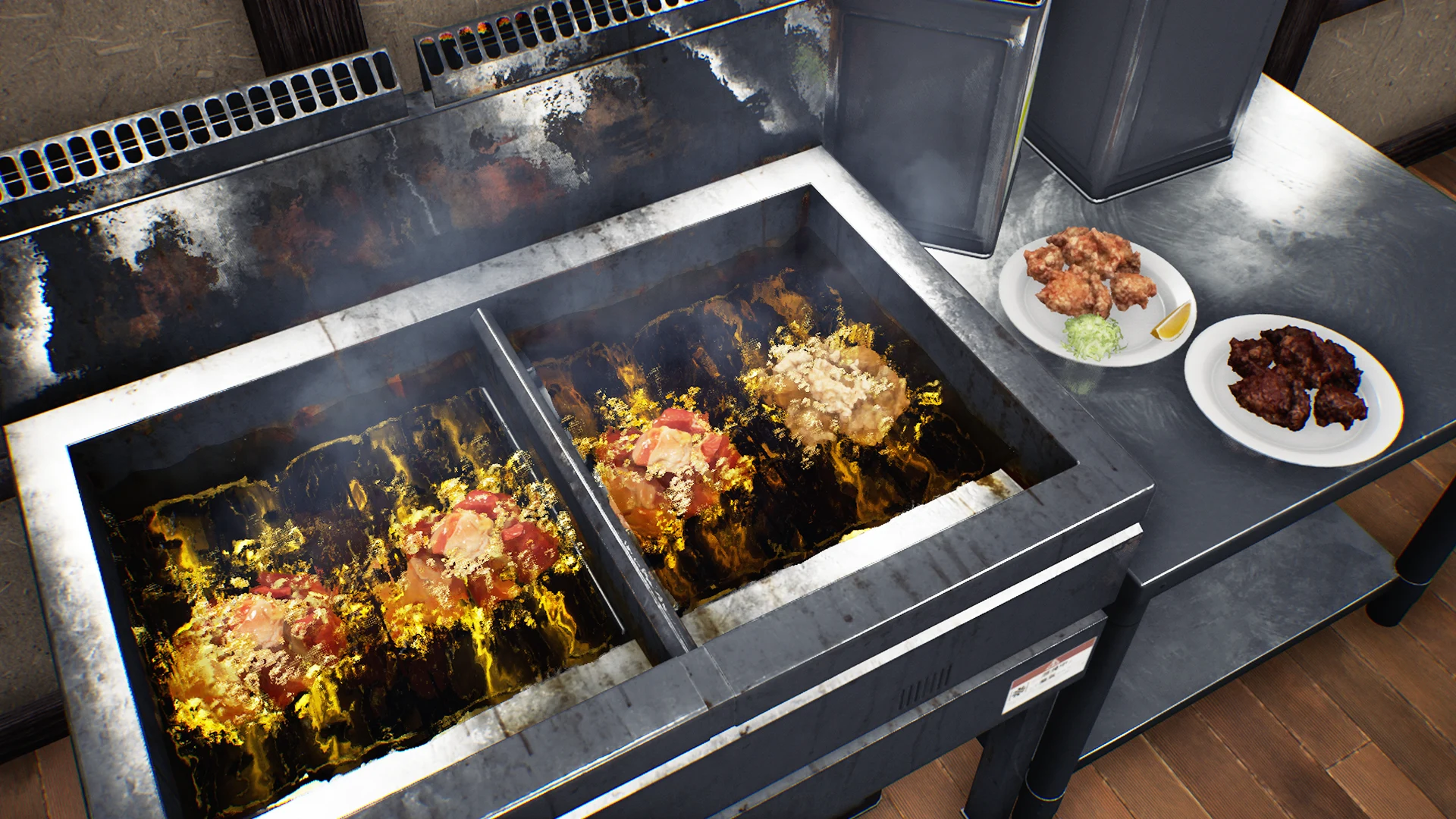
In this imagined later session, their restaurant had reached Level 15. The new fryer, chicken, oil and plates were available under the game’s published rules; the Ticket Machine and water dispenser were already part of their shop. The story does not claim that they reached this level in two days. It is the second evening we have chosen to tell.
The fryer occupied the corner where Jun used to leave a box he kept promising to move. He stood in front of it with the pleased silence of someone whose idea had become a thing in the room. Miki circled behind him, trying to see where the plates would go.
“Now we can offer something proper on the side,” he said.
She looked at the equipment. “We already offered food.”
“You know what I mean.” He did not mean to dismiss her bowls. She did not mean to sound offended by the purchase. Both had arrived wanting a reward for how much better the shop had become. Neither had asked what the other person thought that reward should be.
2. A little less to do
Miki had been saving the curtain choices for a part of the game that could not be judged by how fast she finished it. At work, the small things she liked making were often the first things removed when a deadline tightened. Here she wanted one choice to survive because somebody liked it.
Jun knew she enjoyed decorating. He did not know the rest. He had spent the previous session feeling that every useful thing he did began with Miki noticing a problem. Buying the fryer was his way of bringing an idea of his own. He wanted to be more than the person waiting for the next instruction.
Neither history is an official character biography. They are the private reasons we give these two fictional players—and, tonight, reasons they have not given each other.
Miki chose the rust-coloured noren. Jun said it looked good, then turned back to the fryer without asking which shade she had rejected. She told herself that did not matter.
The Ticket Machine could handle ordering. Customers could fetch water from the dispenser while cups were supplied. Jun looked at these small pieces of help and said, “You should have a little less to do now.”
He meant: perhaps I can carry more of this. Miki heard: the work you were doing is no longer needed.
“Then I will make everything look right,” she said. He heard confidence and assumed she had the front of the shop covered. A kind intention had once again taken the place of an actual agreement.
3. The order with nowhere to finish
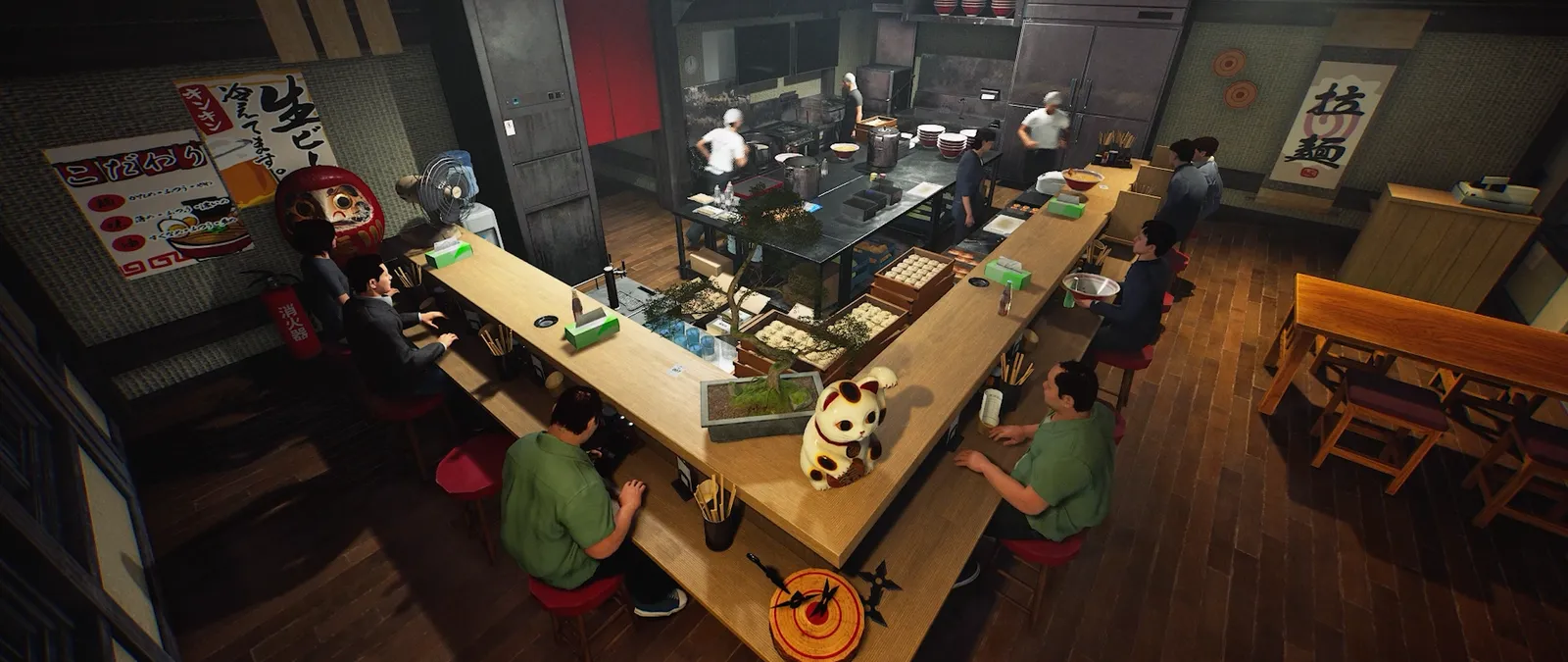
Their first imagined meal with Karaage made the kitchen feel larger than it was. Jun had a side to prepare and somewhere new to stand. Miki had ramen to finish. They used the sentence they had learned in their first story: what was ready, what was missing, who had it.
For a while, the sentence worked. Then Miki noticed a finished dish while its customer continued the rest of the meal. She collected it, pleased to keep ahead of the cleanup, and returned towards the kitchen.
The space she had been using for returned dishes now held Jun’s fryer plates. She had not seen him move them. He had not seen her use that place as a return point.
“I need somewhere to finish this,” he said.
“I am making room.”
“On my side of the kitchen?”
There it was: his side. Miki stopped with the dish still in hand. She had thought the point of getting better was that they would need fewer little borders. Jun had thought the point was that he would finally have something he could take responsibility for without waiting to be asked.
“Tell me where you want it,” she said. Her voice was flatter than she intended.
He pointed without looking up. She put the dish where it belonged and went back to the counter. The order moved again. The argument had merely gone quiet.
For the next few minutes she spoke only when a meal needed checking. Jun mistook the quiet for concentration until he realised she had stopped making jokes about the customers. The shift had become efficient in the least enjoyable way.
4. The empty cup
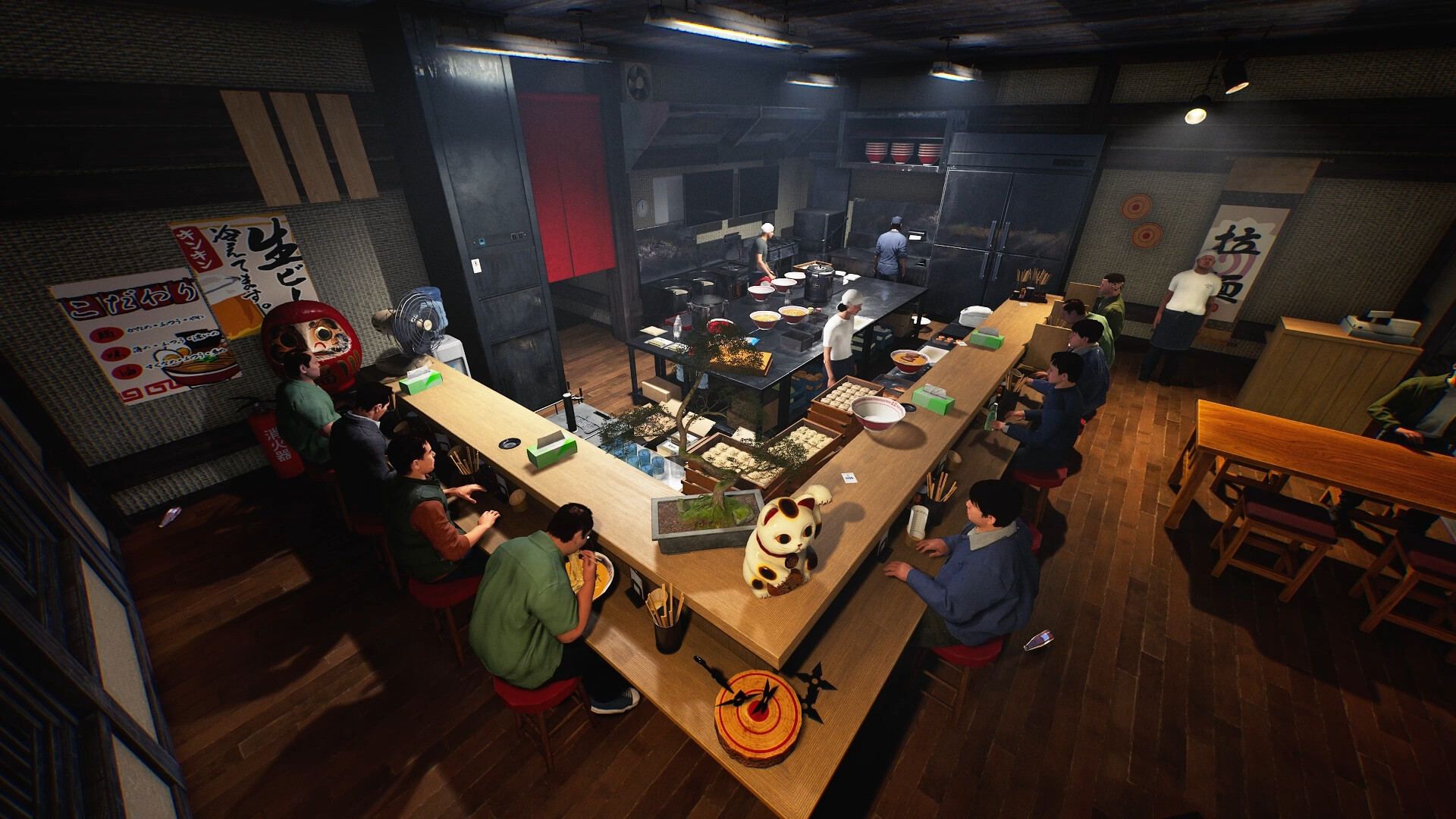
Miki checked the water dispenser and found fewer cups than she expected. In this fiction, both players had treated the supply as something the other would keep an eye on. She replenished it, then stood still for a moment, watching a job become invisible as soon as it was done.
“It still needs us,” she said.
Jun looked towards the fryer. “What does?”
“The shop. The cups. Somewhere for the dirty dishes. All the bits that disappear when they are working.”
“I did not say you were doing nothing.”
“I know. I think I heard it anyway.”
That admission made it harder for him to answer with the defence he had prepared. He had wanted her to say the fryer was a good idea. Instead she was telling him why one ordinary sentence had hurt, and leaving room for him not to have meant it that way.
He set down the item he was holding before replying. “I wanted one thing I could say I had sorted out. Every time we played, you already knew what was missing.”
Miki looked back towards the new station. She had read his concentration as dismissal. For him, it had been a careful attempt not to need rescuing.
“You could have told me that.”
“You could have told me about the curtain.”
She laughed once, without much humour, then nodded. They were both right in a way that did not win anybody the argument.
There was still a shop to run. Miki asked him to name what the next meal lacked. He answered. They would finish the practical conversation first, and come back to the other one when they could listen properly.
“If it is somebody’s job, say whose. If it is nobody’s job, it will wait for both of us.” — original fictional dialogue
5. What the new equipment could not decide
The shared restaurant did not freeze while they talked. The game’s documented pause-menu change applies to solo play, not multiplayer. They kept their immediate agreement small: Jun would check chicken and oil; Miki would check cups and the completed order; returned dishes would have a place that was not also waiting for plated food.
Then Jun asked her where she would put the clean fryer plates. It was a question, not an invitation to take over the station. She gave him two possibilities and let him choose.
On the next handoff he said, “Side is mine. I will tell you when it is ready.” When she brought dishes back, he left her agreed return space clear. Neither action required a speech about being a better teammate. They could see the agreement working.
Later, when they had room for a longer answer, Miki explained the sketches. She did not need every change to be useful. Sometimes she wanted to look through the door and recognise a choice they had made because it pleased them.
Jun asked which colour she had crossed out. She described the blue and why it looked wrong against the nearby surfaces. He looked at the curtain while she spoke. This time she did not have to wonder whether he was waiting for her to finish.
He explained what he liked about the fryer: not only another food, but a task he could learn closely enough to offer help with confidence. She asked him what he had worked out so far. He answered without pretending that all of it was settled.
Their new division of work left room for unfinished learning. It also left room for a colour choice that solved no service problem at all.
6. A different kind of upgrade
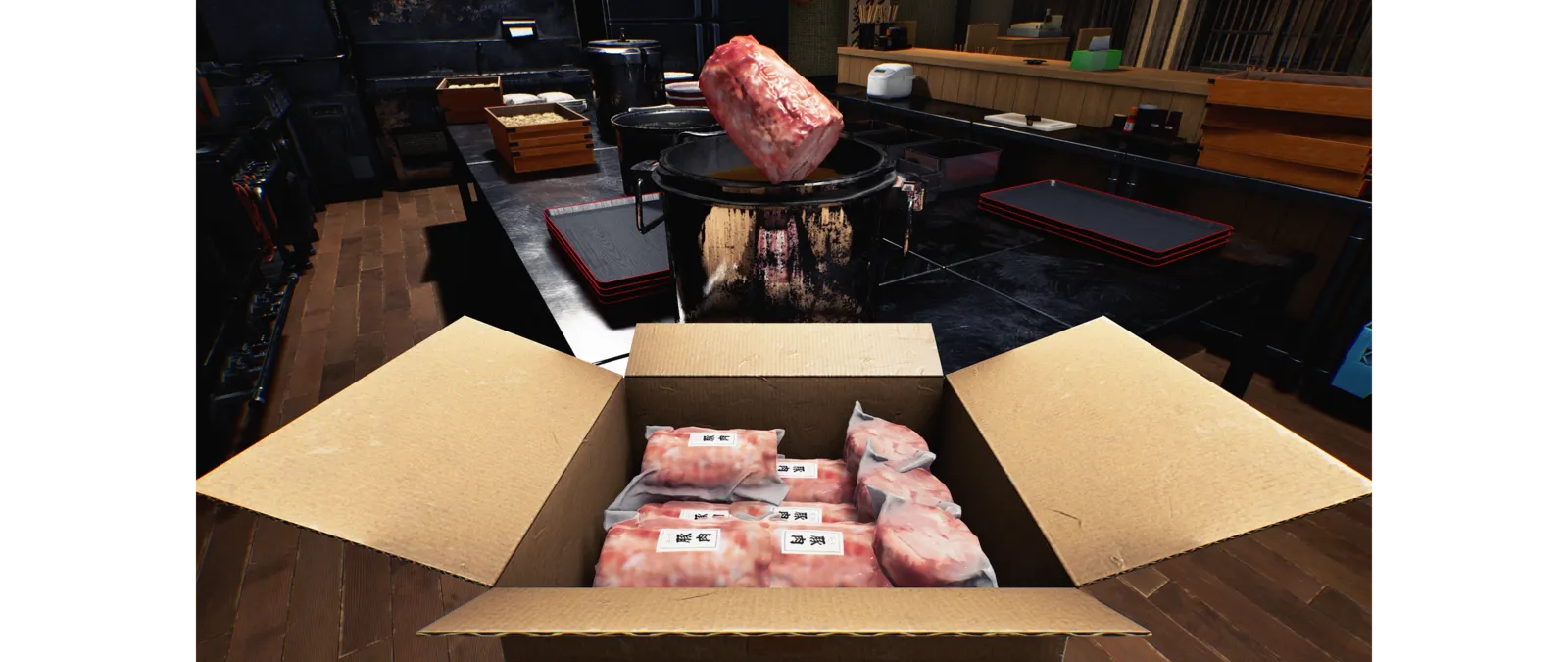
One meal still waited longer than they wanted. An item ended up in the wrong place and had to be moved. The evening did not become proof of a perfect layout, and neither player could have turned it into a convincing profit guide.
But Jun called out the missing component before Miki asked. She asked whether he wanted help instead of silently starting his task. When he said he had it, she believed him and checked the cups.
Near the end of their fictional session, he said the shop looked more like hers now. Miki shook her head, and he almost apologised before she finished.
“More like ours.”
He took a picture of the entrance and sent it back into the conversation that had started with her sketches. Under it he wrote: “The first colour was right.”
Her reply was a picture of the clear space beside his fryer plates. “Keep this bit.”
Neither picture belonged in a list of unlocks. There was no trophy for leaving a counter clear, no official scene in which these characters became friends again. These were the small records they chose to keep of an evening they had nearly spent feeling unnecessary to one another.
The fryer had made another dish possible. The water dispenser had changed a repeated job. The curtain was still only a curtain. What changed the evening was that, at last, each person could explain why the other had wanted to be there.
Before they signed off, Miki left the old handoff note beside her keyboard. She added no new rule. Jun had already written back: “Same time next time?”
“Yes,” she replied. “Bring your next idea.”
After the story: keep the real mechanics straight
The published unlocks are Level 12 for the Ticket Machine, Level 14 for self-service water and Level 15 for Karaage equipment and supplies. The dispenser needs cups; fryer oil becomes dirty with use and needs replacing. Those requirements informed the scene. The characters’ menu, room arrangement and emotional responses did not come from a patch note.
Finished individual dishes and empty bottles can be collected before the whole meal ends. A tray still has a condition: it must no longer hold food or other items the customer is consuming. Our story uses earlier dish collection as a cause of a handoff problem; it does not invent a new eligibility rule or claim that every tray can immediately be removed.
For your own shop, try writing an owner next to each repeating check: oil, cups, complete order and dish return. Then ask whether the arrangement gives everybody a part of the session they enjoy. Use the linked practical guides for the current mechanics. This is a way to organise play, not a measured recipe, efficiency benchmark or official mission.
Story, progress and endings: the questions that matter
Is this an official story mission?
No. Miki, Jun and the events are original fiction. The source notes identify the real systems used as the setting.
Is the second shift literally the second business day?
No. This is a sequel set in a later Level 15 shop. No number of days or sessions to reach that level is established.
Can I pause a co-op game to reorganise?
The November pause-menu change applies to solo gameplay and explicitly excludes multiplayer.
What should I read first?
The Bowl Nobody Served introduces the pair and their first missed handoff. This sequel can also be read on its own.
Are Miki’s work history and Jun’s motives game lore?
No. Those details, like the dialogue and ending, are invented for this original story. They are not biographies or quests supplied by Wild Dog.
Sources, version and editorial scope
Updated 11 November 2026 from Wild Dog’s 10 November hotfix, v0.1.75.20266, first-month retrospective, and the earlier 6 November mini update, v0.1.74.19895, 5 November content update, v0.1.73.19851, and 30 October networking and staff update. These are developer-reported changes; our suggested routines are editorial advice.
Earlier feature and background sources: Wild Dog’s 28 October update, v0.1.63.19293, the official Steam store description and the developer’s game overview. The patch text was retrieved from the official Steam news API; its publication timestamp is 28 October, 12:11 UTC.
The game premise and named systems above come from these sources. The fictional narrative and reflection prompts are our own fiction and commentary. We found no description of a fixed campaign plot, chapter count or scripted ending in these sources; that is a limit of the evidence, not proof that no narrative content can exist. Send a correction with a source and build.