
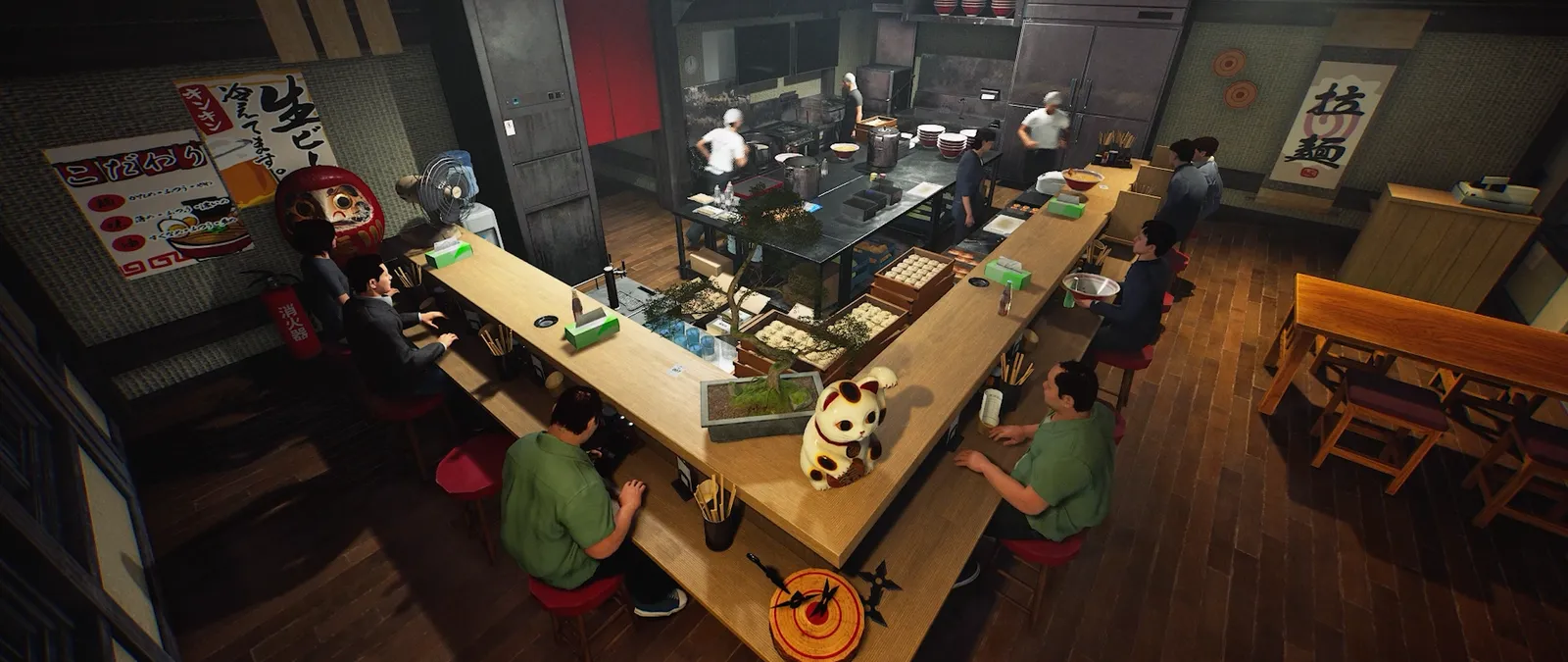
An evening before the shop opens
This fourth original story follows the friends from The Third Apron. We imagine their shop later in its life, with the new area-move tool and level-18 Food Slicer available. The characters, argument and outcome are fiction, not official lore or a recorded playtest. The real November features are identified in the source notes.
The shift below is an original, fictional illustration of the game’s management loop. Its dialogue, mishaps and outcome are invented. It is not an official quest, a transcript, or a claim that we played this session. Official game facts are identified in the opening and source notes.
The plan on the screen
Miki sent the plan before Aya joined. It was a screenshot with three arrows drawn over the kitchen: preparation towards the back, clean dishes beside the counter, the new slicer where a little worktable stood now. Underneath she wrote, “We can move the whole station together.”
Jun replied immediately. He had wanted that table gone for a week. Every time he crossed the room, it seemed to be waiting in his way. Miki had wanted the shelves on the other wall. At last, they had found an arrangement they both liked.
Aya arrived while they were discussing which direction to turn the counter. She looked at the picture for longer than either of them expected.
“Is that the table by the window?”
“Yes,” Jun said. “We get a much cleaner route.”
Aya moved her character to it. The top was almost bare. There was nothing rare about the table and no game rule requiring it to stay. It was where she had made her first complete bowl while Miki, with visible effort, let her finish. In the photograph from that evening, a strip of the window showed behind their shoulders.
“Where does it go?” she asked.
Miki checked her arrows. She had found a destination for everything that mattered to the plan. The table itself was not one of those things. “We don’t really need it.”
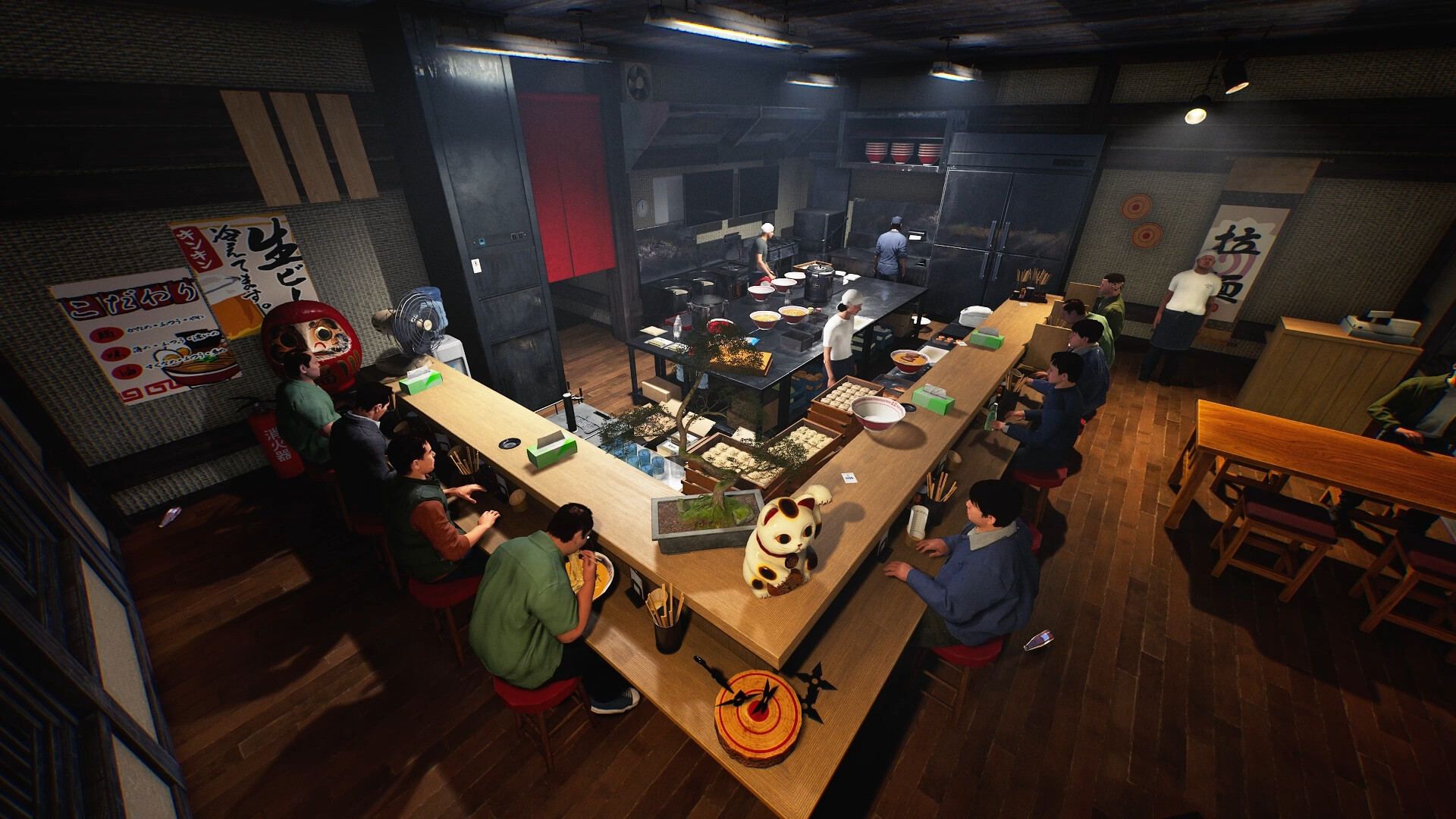
Before became after
They had agreed to rearrange before opening. Jun asked whether everyone was ready, and Aya said, “I suppose.” Miki heard the yes she had been waiting for.
The new area-selection feature made the change feel surprisingly small. A group of furniture became a group somewhere else. Equipment that would once have demanded a series of separate moves travelled with it. Miki checked the destination. Jun took his character through the space where he usually turned.
“Look at that,” he said.
Aya looked at the window instead. The corner was no longer a corner. It was part of a route, open and useful and already difficult to explain wanting back.
Miki turned the view towards the new floor design. She liked the quiet rectangular tiles; Jun liked being able to see where the work area ended. Aya made a small sound of agreement. It was not dishonest. The floor did look good. That made the rest harder to say.
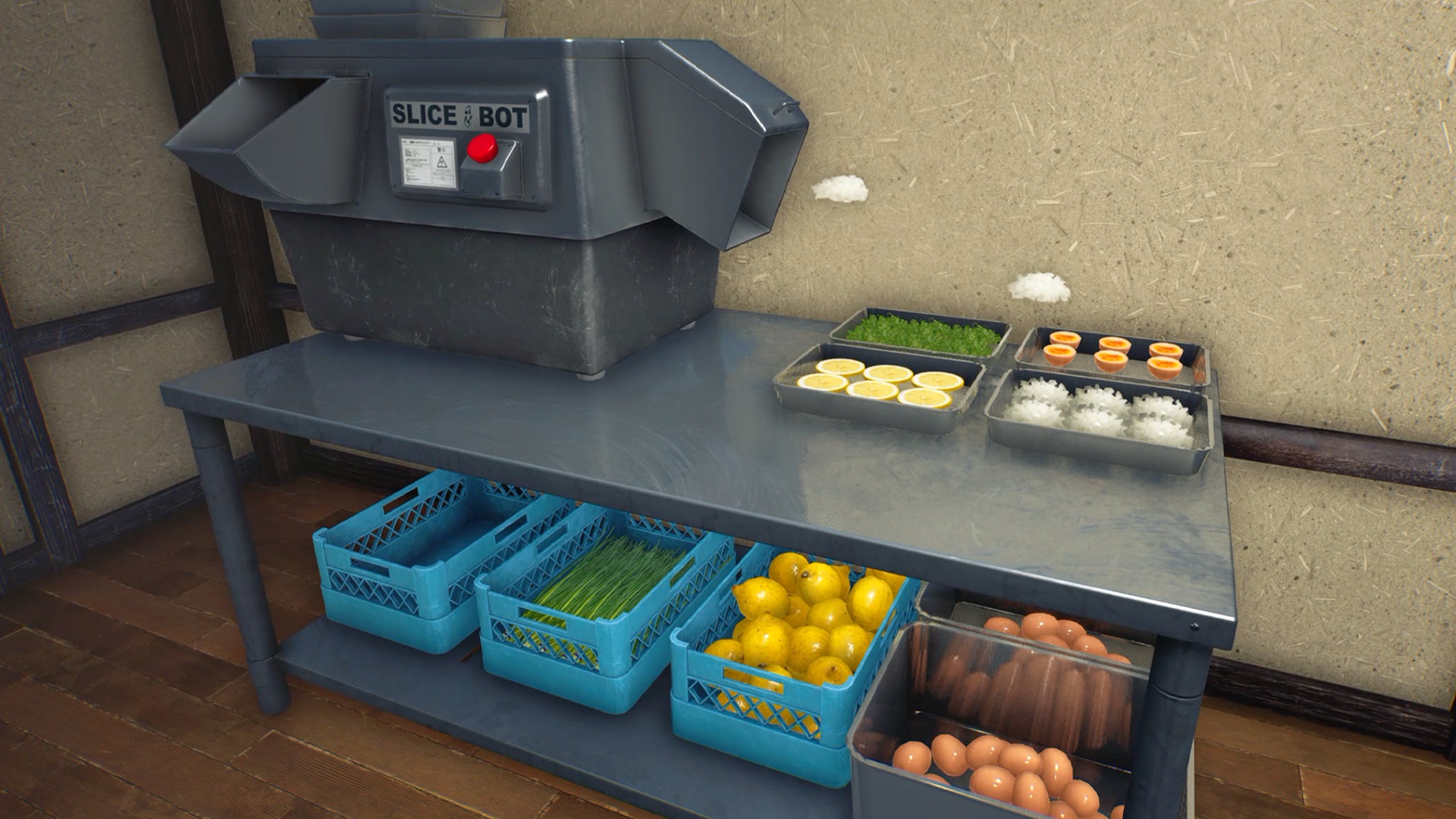
Jun brought up the Food Slicer. In this imagined later shop they had reached level 18, its published unlock level. He liked the clear promise of it: load a tray, load ingredients, press the button. A task with a beginning and an end. He was tired of the part of every shift spent wondering what had been prepared and what had merely been moved.
“This is going to help,” he said.
Aya watched him find a place for it. “I didn’t know we’d decided.”
Miki stopped moving the camera. “You said you were ready.”
“I said I suppose.”
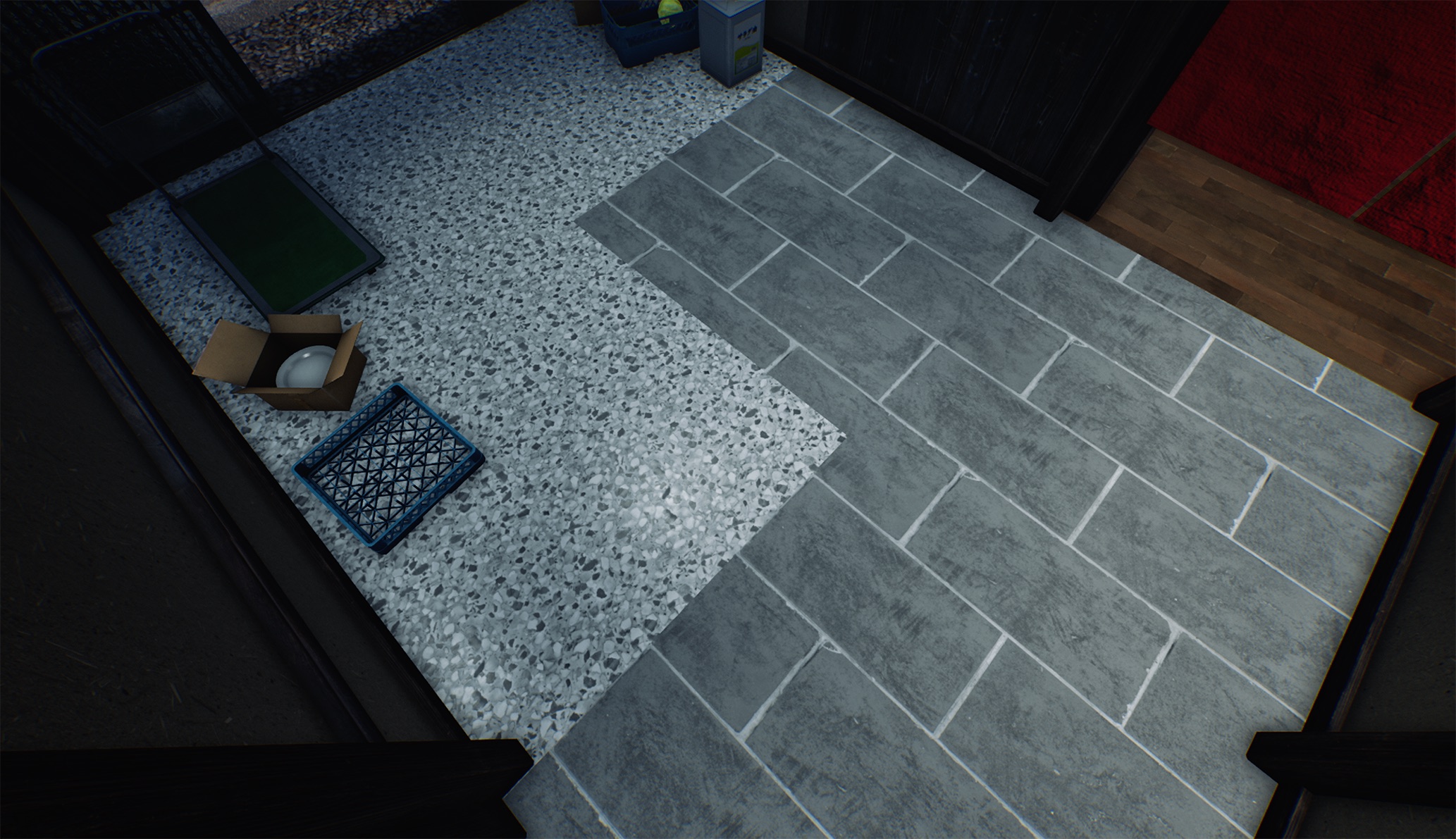
A table is only a table
Jun said they could put the table somewhere else. Aya said that was not what she meant. Miki waited for an explanation, but Aya was still trying to find one that did not sound like she wanted the whole restaurant to remain awkward for the sake of a photograph.
“You two made the plan,” she said at last. “Then you showed me the plan.”
“We thought you’d tell us if you wanted something different.”
“When? You were already talking about which way to move it.”
Jun leaned back from his keyboard. On his screen, his character stood in a remarkably sensible place between two stations. He had been pleased with the route, and he still was. That did not make it easy to defend the conversation that had produced it.
Miki opened the old photograph. She remembered the first bowl and Aya’s relief when she finally understood what she was doing. She also remembered Jun repeatedly turning around that table while she talked Aya through the order. The photograph had kept one memory and left the other outside its edges.
“I don’t want to run a museum,” Jun said. He heard the impatience in it too late.
Aya’s answer was immediate. “I don’t want to be a souvenir.”
For a moment nobody spoke. The new machine, the cleaner floor and the wider gap all remained on screen. Nothing in the game could tell them which of those two sentences they should repair first.
What each person wanted to keep
Miki asked them to stop moving things. They left the shop unopened and took their hands off the controls. Jun apologised for the museum remark. Aya said she knew he was trying to make the room work. Neither apology made the table fit.
“What do you actually want to keep?” Miki asked.
Aya thought about saying the corner. It would have been an easier answer. “Somewhere I can start a bowl and still be the person finishing it. I liked knowing that was my place.”
Jun looked at the slicer. “I want the ingredients to stop turning up in three different places. I want to know where the next tray is.”
Miki wanted the shop to look like one room instead of an argument between their purchases. Saying it aloud made her feel vain until Aya said that she liked the new floor. She had liked it the first time too. She had simply wanted to be asked about more than its colour.
They tried to describe those wishes without naming furniture. A place to finish something. A preparation routine Jun could trust. A room Miki enjoyed looking at. The list was shorter than the list of objects they had been moving, and more difficult to satisfy.
Aya suggested keeping one clear work area near the window and moving the spare table away from the busiest turn. Jun wanted to see what it did to the route before agreeing. This time they marked the possible move and talked about it before confirming. Miki took a picture of the current arrangement so they would have something concrete to compare.
The first attempt was poor. Jun could approach easily; Aya had to work around a crowded surface. The second looked better in Miki’s screenshot and felt worse from the floor. They said so. No one tried to turn a disappointing trial into proof that the other person’s wish was unreasonable.
The room had a price
They settled on a smaller change than the one Miki had drawn. The preparation equipment moved. One storage position stayed where Jun preferred it. The spare table went elsewhere, but the work area Aya could use from beginning to end remained by the window.
Jun took the route again. It was better than before and less direct than his favourite version. He said both things. Aya did not ask him to pretend otherwise.
Miki changed part of the floor, then left the rest until another evening. She had wanted a finished picture. What they had now was a room with a visible decision still waiting in it. She saved a screenshot anyway.
By then, much of their playing time had gone. They could have opened and rushed the remaining session. Instead, they used the last minutes to check the new station, read the changed menu controls and decide what they wanted to serve next time. There was no fictional record profit to reward their good communication. They had spent an evening arranging a room and arguing about a table.
Aya read the Food Slicer instructions while Jun checked the supplies. She pointed out the empty-tray requirement before he tried to use the tray already holding ingredients. He found another one. Neither made it into a lesson about who knew the game better.
Miki sent the new screenshot to the chat. Jun replied with one more small change he wanted to try. Aya circled a crowded patch of worktop. The picture looked less finished each time someone replied, and more like something they were making together.
A photograph with room around it
After Jun left, Aya stayed on the call while Miki compared the two pictures. In the older one, the friends nearly filled the frame. The new screenshot showed more empty floor.
“I wasn’t trying to keep everything the same,” Aya said.
“I know.” Miki paused. “I know now.”
She nearly explained how long she had spent on the plan. Instead she asked Aya which part she wanted to try designing next. Aya said she would rather run the new arrangement for a shift first. She wanted to find out what was awkward before drawing another arrow.
Miki named the screenshot “try this next time.” It was a less impressive title than “new layout,” and a more accurate one.
When Aya disconnected, Miki left the old photograph in the chat. Keeping it did not require restoring every object it contained. Nor did changing the room require pretending that nothing important had happened there.
The next morning Jun added a message beneath the new picture: “Before we move anything else, all three of us?”
Aya replied first. “Before.”
Miki added a small arrow pointing to the word.
After the story: compare a layout before committing to it
For your own group, ask what each person wants the new arrangement to make easier. Take a before picture, try a small selection and inspect equipment, stored contents and access separately. These are editorial suggestions, not a measured optimal layout. A successful placement is not proof of faster service.
The 13 November notes introduce area selection in Build Mode, including counter-top equipment and stored items moving with the selected group. They also add surface designs. The 19 November announcement introduces the level-18 Food Slicer and specifies its empty tray, ingredient container and button sequence. Those are the sourced mechanics used here; the friends’ priorities, trial results and evening without service are invented.
This episode follows The Third Apron, where Aya first asks to complete a bowl herself. Here the question is larger: whether her opinion can change the place where that bowl is made. It does not reveal an official quest, furniture bonus or scripted ending.
Story, progress and endings: the questions that matter
Is this a quest in Japanese Ramen Simulator?
No. It is original Ramen Sim HQ fiction about a co-op shop, with real mechanics identified separately.
Does keeping the window work area provide a game bonus?
No bonus is claimed. Its meaning and the layout results belong to the invented story.
Can the real game move more than one object together?
The 13 November update adds area selection in Build Mode for equipment and decorations, including counter-top equipment and stored items.
Does the fourth story mean the shop reaches level 18 in four evenings?
No. These are selected fictional episodes, not consecutive game days or a measured progression schedule.
Sources, version and editorial scope
Updated 25 November from Wild Dog’s 21 November v0.1.87.20965 note, 19 November v0.1.84.20900 update and 13 November announcement. The last has v0.1.79.20515 in its feed title and v0.1.79.20528 in its body. Game changes are developer-reported; comparisons and team routines are editorial suggestions.
Earlier feature and background sources: Wild Dog’s 28 October update, v0.1.63.19293, the official Steam store description and the developer’s game overview. The patch text was retrieved from the official Steam news API; its publication timestamp is 28 October, 12:11 UTC.
The game premise and named systems above come from these sources. The fictional narrative and reflection prompts are our own fiction and commentary. We found no description of a fixed campaign plot, chapter count or scripted ending in these sources; that is a limit of the evidence, not proof that no narrative content can exist. Send a correction with a source and build.